

Starting on Oct. 1, the U.S. federal government was shut down for what would become 43 days, making it the longest government shutdown in U.S. history. The shutdown began after Congress failed to pass the necessary funding bills for the 2026 fiscal year.* The lack of funding left many federal agencies without the resources to function properly, with millions of government employees left without pay for their work. This forced key public services to slow down or cease operations completely, including many national parks, museums and airports across the country. The shutdown highlighted deep issues in modern U.S. politics, showcasing deep divisions in Congress and raising questions about the stability of the government’s budgeting process.
*A fiscal year is the government’s 12-month budget period, which for the United States runs from October 1 to September 30. Every new fiscal year, Congress must pass funding bills to keep federal agencies operating.
Causes of the Shutdown
The core cause of the shutdown was a political disagreement between Republicans and Democrats over budget priorities. Republicans in the House wanted to maintain the prior funding distributions until November, but they did not include an extension for the Affordable Care Act (ACA), an act that Democrats deeply advocated for and which gave income-based tax credits to subsidize the cost of insurance for healthcare. This disagreement over the ACA credits became the central issue that brought funding negotiations to a standstill.
Democrats argued that failing to extend these credits would threaten millions of Americans’ access to affordable health insurance, while Republicans argued that the issue could be handled after the initial short-term funding bill was passed. However, Democrats made it clear that they would not pass the funding bill without the ACA’s inclusion, and with both sides refusing to concede their priorities, no agreement was reached by the end of the 2025 fiscal year on Sept. 30. With no funding to spend in the 2026 fiscal year, the U.S. government officially shut down on Oct. 1.
Consequences and Impacts
The government shutdown had widespread effects on federal employees and the general public. Over 900,000 federal workers were furloughed or temporarily laid off, and nearly two million were required to work without pay, which created financial stress on individuals and families.
Air travel also took a brutal hit, with many flight cancellations and delays, as TSA and air traffic control were severely understaffed. Museums and national parks were among the first to close, as they were not deemed “critical” enough public services to keep up.
Essential services like law enforcement, military, and emergency health services continued to operate, though some staff had to work without pay. Some federal assistance programs, such as SNAP, faced delays, putting millions of Americans at risk of losing critical food benefits, while education programs, federal research programs and scientific research were put on hold.
In terms of the economy, the Congressional Budget Office estimated the shutdown reduced the U.S. gross domestic product, which measures the size of an economy, by seven to 14 billion dollars. Small businesses were hit hard due to a lack of business loans. In addition, the prolonged standoff between the two parties increased political tensions and reduced public confidence in the government’s ability to manage essential funding and operations.
Resolution and Future Outlook
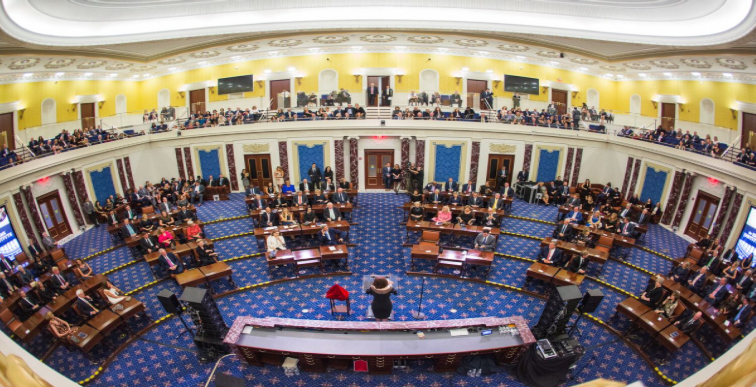
Licensed under CC BY-NC-SA 3.0 (https://creativecommons.org/licenses/by-nc-sa/3.0/). (Eric Haynes)
The shutdown ended on Nov. 12, when Congress passed a funding bill that was signed into law by President Donald Trump. The agreement will fund most federal agencies until Jan. 30, 2026, and will include pay for employees who were previously working without pay.
While the deal temporarily restored government operation, it did not fully resolve the political conflict between Democrats and Republicans, with the ACA not being included in the funding. Federal agencies began reopening services and catching up on work, but many programs still face an overflow of problems because of the delay.
Looking forward, the temporary funding only going to Jan. 30, 2026 means lawmakers will need to negotiate again in a few months to prevent another shutdown. Overall, the 2025 shutdown highlights several key lessons for the future. It has demonstrated the importance of a timely compromise between political parties, shows us how even short-term shutdowns can create long-term and severe damage to the economy and individuals’ well-being, and highlights the possible need for systemic reforms, such as clearer budget timelines or safeguards that protect essential services from future political disagreements. In the future, U.S. political parties will have to build a more stable and reliable approach to government funding, prioritizing long-term planning to ensure the lives of millions of Americans are not jeopardized.