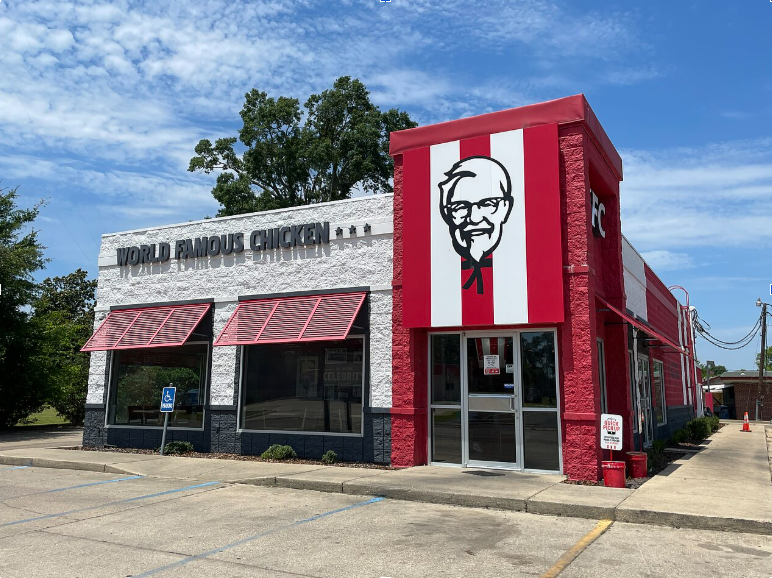
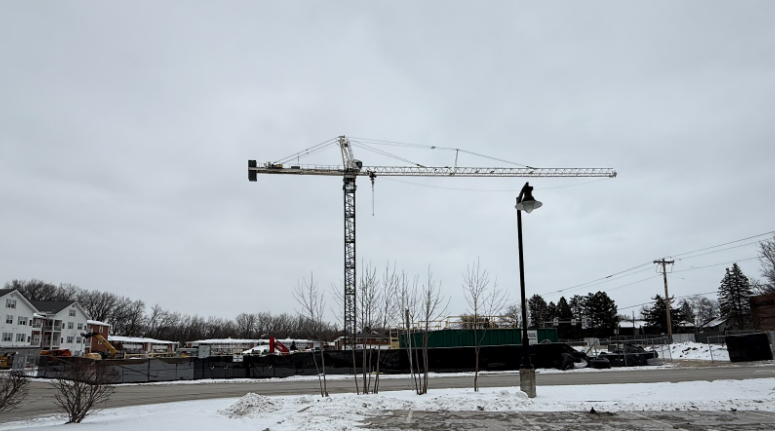
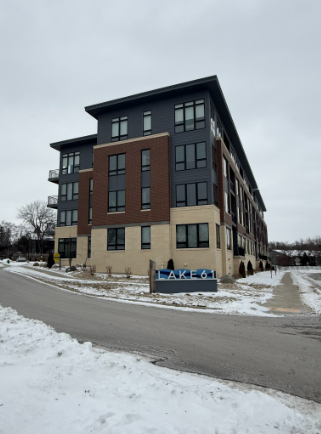
There is an all too common sight for Middleton residents to witness when peering out from the window of their cars, walking along the sidewalk or striding across the trails which criss-cross our town. Where a laundromat, an older home, a soccer field or, most often in recent years, an open field once stood, new apartments, single-family homes and construction sites now dot the landscape, often accompanied by a “Now Leasing” sign lining the street. These new apartments in particular typically follow the similarly boxy, modern, generic multifamily homes that have come to dominate Middleton’s post-COVID-19 landscape.
These recent developments do not come without precedent; contrary to the statewide trends that project Wisconsin to lose about 183,000 people, or roughly 3.1% of its population, Dane County as a whole is booming. According to the City of Madison, the Greater Madison Metropolitan area is expected to grow by approximately 35% by 2050, reaching a county-wide population of 780,000 people.
Naturally, this regional growth has spilled over into the neighboring city of Middleton, where the population has grown steadily in recent years, increasing from 21,827 residents in 2020 to an estimated 22,566 by mid-2024, the most recent available population estimate. This growth is even more striking over the past decade, with Middleton’s population increasing by roughly 4,000 people, a 21% increase compared to the previous decade, when only around 2,000 people moved in.
A combination of these factors have sparked concerns among residents about overpopulation, rising housing costs, infrastructure strain, and most pressing to our readers, the potential strain it may have on our already inflated school district. An interview with Mayor Emily Kuhn was conducted to explore these issues more in depth.
Middleton’s Growth Spurt
The existing unease around overpopulation is not abstract; it is reflected not only in the population data discussed earlier, but also in recent construction trends. From 2023 to 2025, the city of Middleton went from approving around 10 single-family homes per year to more than 200. Combined with a 2023 zoning rewrite, this opened up previously agricultural land along Middleton’s northern border—including Springfield and areas around Graber Pond—to development. This paved the way for the single-family homes, duplexes and apartment complexes that are now developing in locations such as Redtail Ridge, Belle Farm and Pheasant Crossing.
What has driven this recent surge in development, especially when it brings the added pressure on housing, infrastructure and schools? Seeking answers, we posed that same question to Mayor Emily Kun during our interview.
Now in her third year as mayor after taking office in 2023, Kuhn pointed to housing supply as a key driver behind the city’s growth strategy, explaining, “If everyone wants to live in the city of Middleton and there’s nothing on the market, the price [gets] jacked up, just because of scarcity.”
A reasonable response considering the median home price in Middleton is now roughly $535,000, making it one of the more expensive markets in the state. Given these rising costs, we asked Mayor Kuhn whether the city is requiring or encouraging affordable housing in new developments and what specific steps are being taken to ensure young families or seniors are able to afford to live in Middleton. In response, Kuhn emphasized that the city’s zoning rewrite was intended to fix long-standing shortcomings in how Middleton handled growth.
“Middleton was known for a four-year processing time for any project […] With all of my internal communications and tweaking processes and getting rid of pain points, developers are now moving through the city process in about one year,” Kuhn said. She explained that shortening approval timelines reduces costs for builders, leaving less of a cost for consumers to absorb and thereby keeping housing prices from rising even further.
However, although the streamlined process has made building in Middleton more attractive to developers, it is unclear how directly those savings translate into affordability for residents. Many of the new homes being built still fall well above the feasible price range for first-time home buyers at around $400,000 to $600,000, prompting doubt on whether increased efficiency alone is enough to address Middleton’s affordability gap.
Overcrowded Halls
While rising housing costs and rapid development remain major concerns, the issue most immediately felt by Middleton residents is how this growth affects local schools. Middleton High School and the Middleton-Cross Plains Area School District are already among the largest education institutes in the state, serving student bodies of over 2,240 and 7,100 respectively. Thus, the influx of urban growth near and around the already packed schools raises significant concerns about overcrowding and strain on district resources.
As more and more students continue to pour into the halls, classrooms and parking lots of Middleton High School, it has become more important than ever to ensure that the district has the resources and long-term planning to support continued growth while maintaining educational quality in the future.
When asked about her plans for the district and the high school, Mayor Kuhn mentioned that she is in regular correspondence with both, stating, “We do talk all the time, as they have better demographic information than I have.” This demographic information pertains to statistics regarding enrollment, future projections, and the housing-to-student ratio. If data suggests that further resources are necessary to ensure adequate education, those needs can be addressed through collaboration with the mayor or city planners.
Kuhn also stated that she would be open to the idea of an additional middle school, explaining that she will “support a referendum for another middle school if the need ever presents itself.” Furthermore, Kuhn pointed to the changes in the type of people migrating into Middleton, noting that while new housing developments were attracting residents, many of these households consisted of young professionals or empty nesters rather than families with school-age children.
“The school district in reviewing said that babies aren’t being born in these homes and their children aren’t moving in. A trend [that] actually started after the 2008 Great Recession, when birth rates were already low,” Kuhn explained. Still, much of Middleton’s growth comes from families moving into the city for its high-quality schools and proximity to Madison, meaning enrollment pressures may persist even with lower local birth rates.
The Next Chapter for Middleton
Middleton’s population is growing, and the way Middleton builds, develops housing and provides services will need to change in tandem. By 2050, it is predicted that Middleton’s population will reach 37,000. While anxieties and concerns surrounding the boom of apartment and housing construction are well-founded, it is a natural continuation in the broader expansion occurring across the Madison Metropolitan Area.
This continues to emphasize the need for prominent figures like Mayor Kuhn and other city planners to anticipate and respond to rising housing demands while balancing concerns about overpopulation. This balancing act will be vital to ensuring that Middleton’s growth remains sustainable and that the city can continue to provide adequate housing, infrastructure and educational resources for residents and students in the coming years.