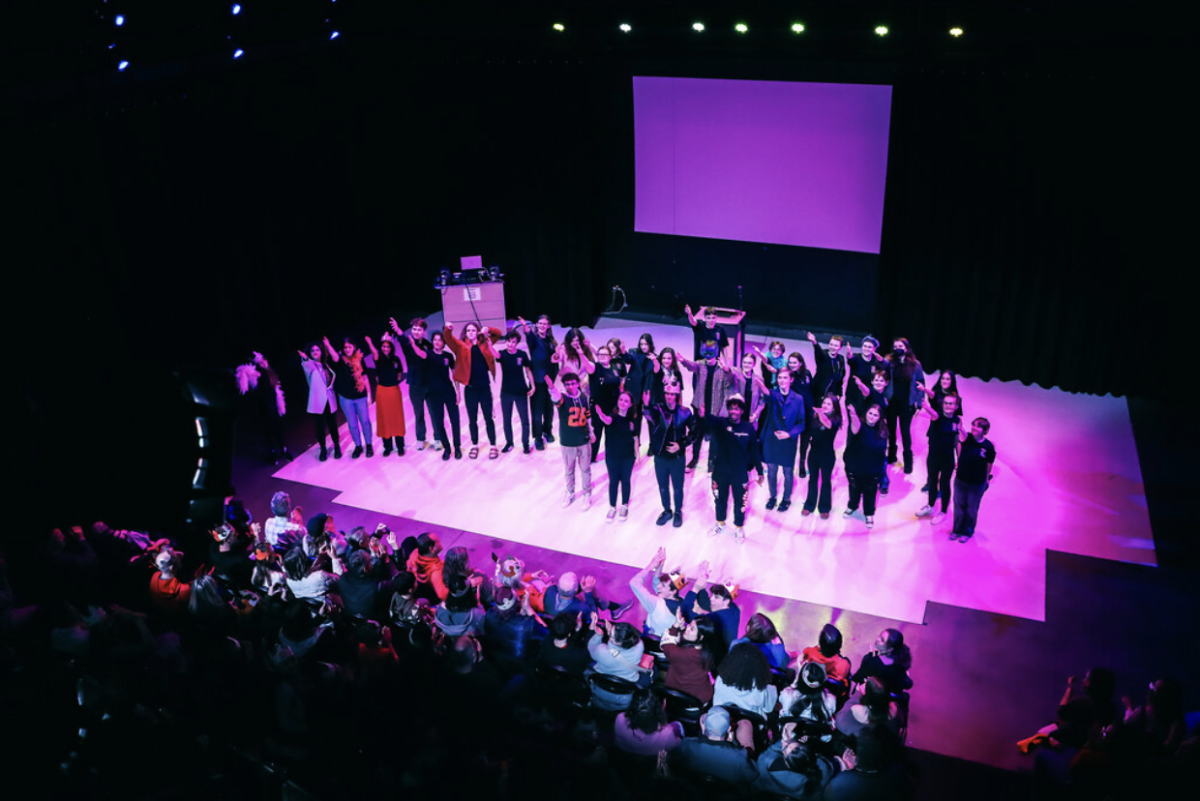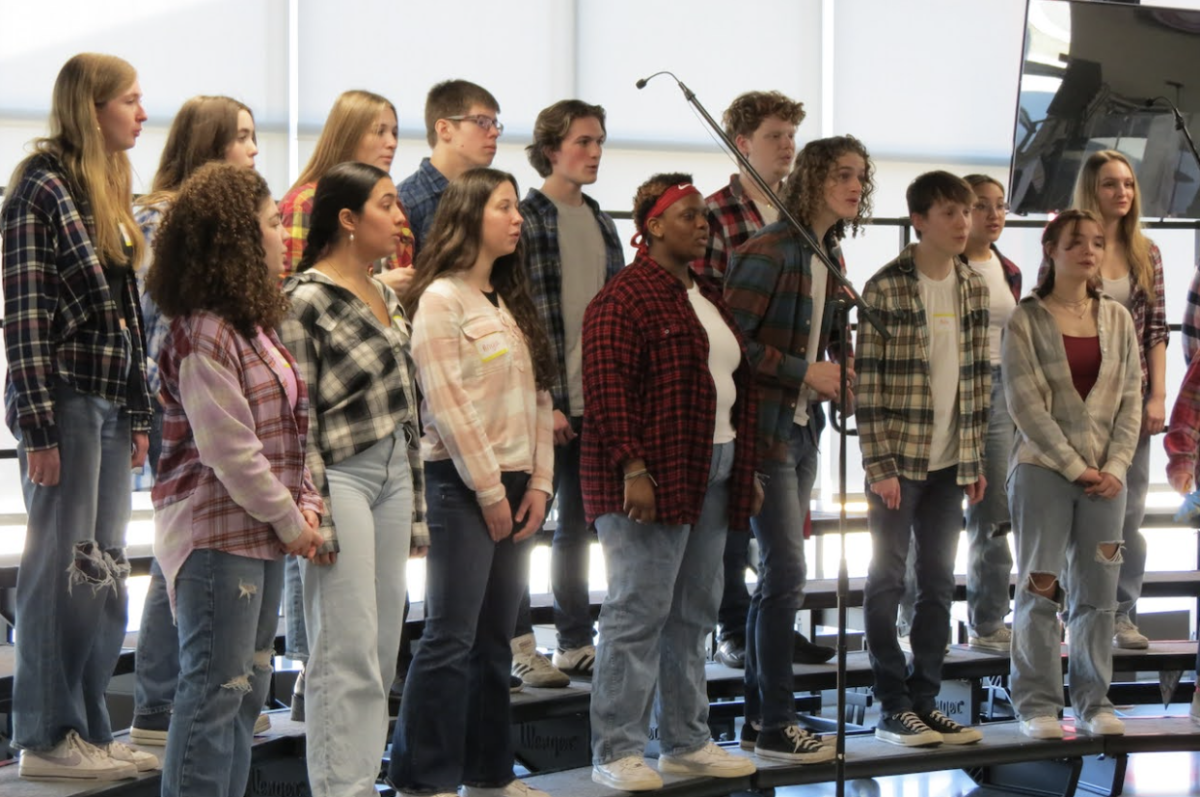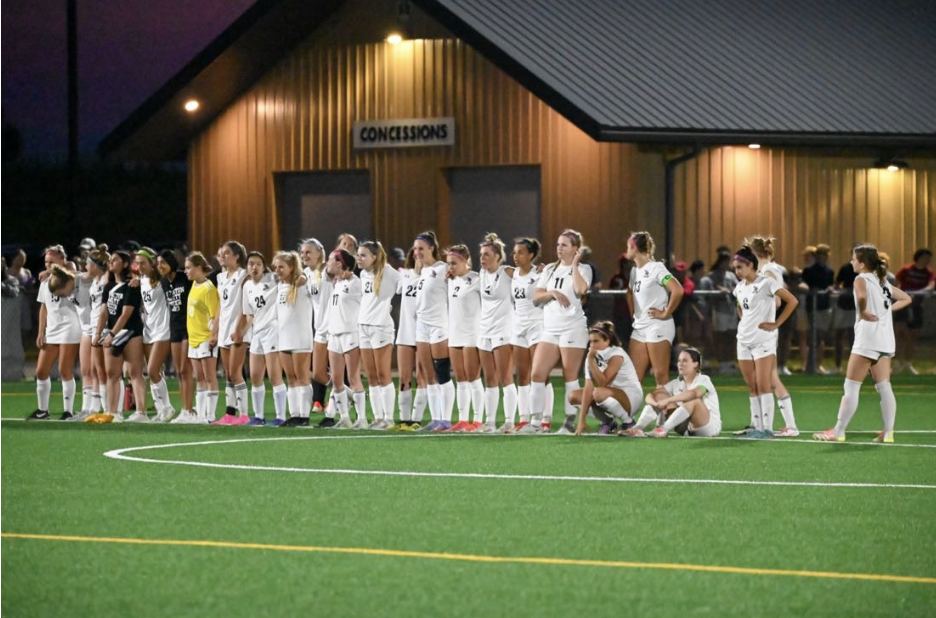
It’s an annual ritual of Middleton High School -a point of transition from the monotony of the third quarter, to the early spring months and an anticipation of summer. Therefore, Fine Arts Week is seen with deliverance by the student body, a chance to escape from a never-ending stream of projects, quizzes and packets. So ironically, it seems as though the intended effect of Fine Arts Week, to display youth art, music and choir, is often overshadowed by a tendency to cluster with friends or quietly slip away to whichever row they happen to be in.
And who can blame them? Not to judge the courageous performers willing to put themselves before the gaze of a large chunk of their peers, but yet another mundane jazz ensemble, an opera-esque performance to an obscure toon or a choir concert isn’t what most MHS students would consider memorable or attention-grabbing.
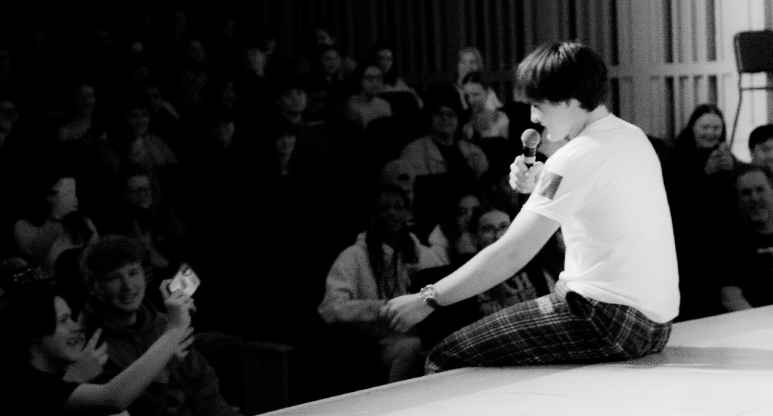
Hence, to the delight of many, the most palpable buzz and fanfare of Fine Arts did not belong to a classical soloist or a jazz ensemble, but to a scheduled rap performance by sophomore Colin Ludwig, who performs as C$ (pronounced C Money) and Maximilian “Max” Kirchstein on Friday, the last day of the event.
Questions like, “Bro, will you be at the C$ concert?”, “His lyrics are crazy…” and “Why doesn’t he wear a shirt in his videos?” consumed hallway conversations as attention and anticipation grew for his performance.
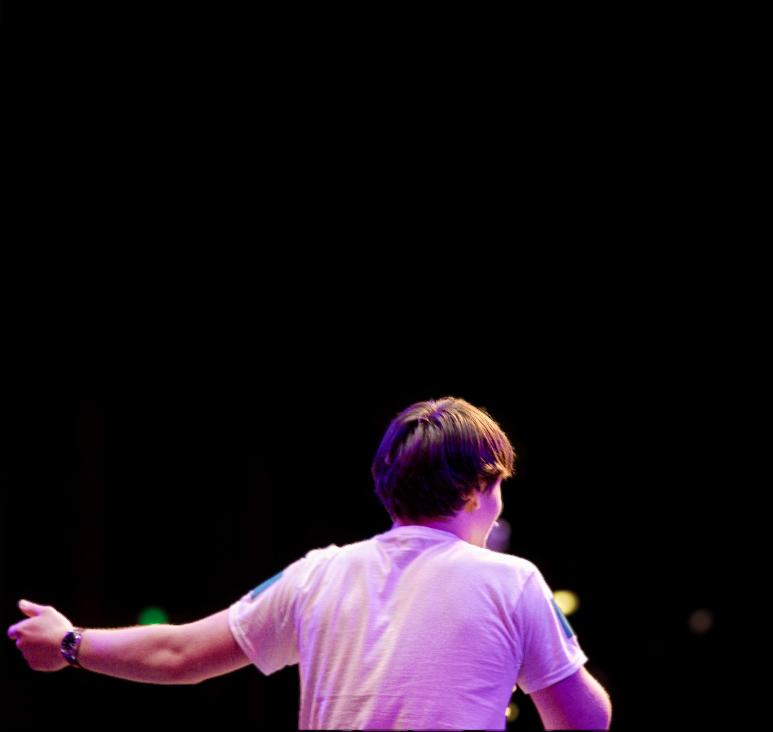
And perform he did, living up to the hype and expectation. C$ performed numerous songs from his discography, specifically titles including “First Concert,” “Middleton,” “Sleepless” and “I’m Not Gay.” Accompanied by his partner Max Kirchstein, whose artist name is “floorboard.”
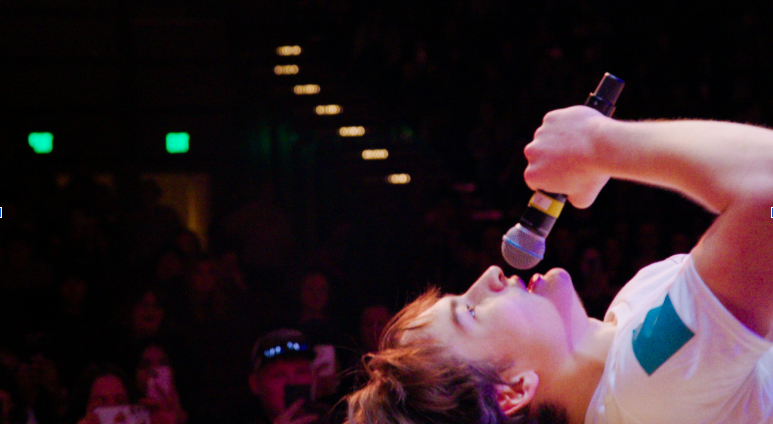
Curious about the man behind the moment, we caught up with C$ for an interview following his debut, covering topics ranging from his origins in music to how it felt standing before the largest crowd of his life.
The first and most obvious place to start is: “Where did it all begin”? Was it perhaps another hip-hop artist that inspired him? Surprisingly, C$’s earliest inspiration was a YouTuber.
“I saw a DanTDM video of this guy making music,” he said, “he was making, like, the most trash song… I looked at that, and I was like, ‘oh my gosh dude, this is so cool.’”
The video he specifically recalls was a 2018 video titled “I made a song in under 4 hours!”, which he says he watched in 5th grade during the pandemic.
When we asked him about the tools, software and creative processes behind his music, C$ traced a journey of trial and error. Initially, he used a BandLab knock-off for his early works; however, following the passing of his Grandmother, C$ received a $5,000 inheritance that he used to buy Ableton, a music creation software.
In retrospect, C$ expressed that the purchase may not have been his best decision. While he appreciates some of the equipment he purchased, he questioned whether the software itself justified the price. “The only thing that was worth it was the speakers.”
A prevailing sentiment that we got from C$’s music process was a “pulling yourself up by your bootstraps” mentality. In fact, when we asked him whether his experience as a cellist in the MHS orchestra benefited him, he dismissed the idea.
“Cello is fun to play, but it taught me nothing about actual music,” he said. “I pretty much had to listen to music… I just watched a whole bunch of YouTube videos.”
We transitioned to his performance itself: the lead-up, the obstacles and the reaction. Although he was obviously grateful for the opportunity and exposure that his Fine Arts performance brought him, he did concede that it did not come about without issues. First was a lack of communication and administrative apprehension of a student-led rap performance.
“They didn’t communicate with me at all,” he said, “like, literally a week before I knew what was going on.” This extended to basic logistics: microphone setup and whether the instrumental could be played live—details most performers would expect well in advance.
The apprehension from administration was equally telling; upon hearing that Mr. Kerr—the teacher in charge of auditions—was relieved the performance “didn’t go off the rails.”
“He really doesn’t trust me with this,” C$ said. However, in general, he received positive and motivating feedback from staff.
During the performance, C$ did have a few self-critiques, particularly regarding his breath control.
“I got so out of breath,” he said. “I watched it back, and I was like, this is not all that I thought it would be cracked up to be.” But this could probably be attributed to his inexperience with performing live or the adrenaline he had going into it.
Concerning the post-performance reaction, C$ definitely appreciated all the attention (who wouldn’t?) but he did mention the superficiality of it all.
“It just felt so fake,” he said. All these people calling me [and] one person called me their idol.” After the performance, people kept calling him by his stage name, C$. He added that above all else he just wanted to be treated like a normal person: “when people call me Colin, I sometimes get happy about it.”
To conclude our informational chat, we had to ask C$ the question that was on everyone’s mind: would he be performing again next year? His answer was an emphatic “yes,” though he was characteristically considerate about it.
“I hope that Max and I get to perform next year,” he said. “But if not, I understand that people need to be fit in [for performances].” Before dropping the mask slightly, “I think next year we need like 10 minutes. 10 minutes is good.”