
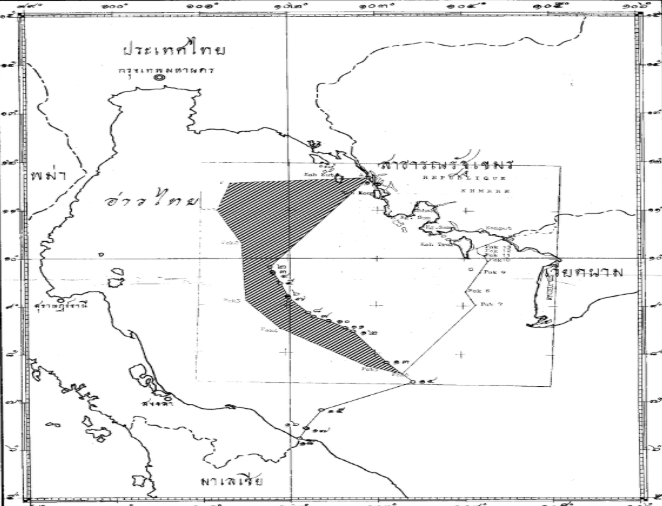
On July 24, a century-long feud between Thailand and Cambodia escalated to a direct conflict. Disagreements over border boundaries stemming from historical treaties and maps have historically led to disputes between the two countries. These are particularly prevalent in areas surrounding culturally and historically significant sites in border regions. These unresolved conflicts continue to negatively impact diplomatic relations, economy and trade, while affecting the lives of hundreds of thousands of people living near the border.
The Thailand-Cambodia border conflicts originate from unclear boundary agreements created in 1904 and 1907 when French colonists mapped the border between Siam—modern-day Thailand—and then-French-controlled Cambodia. These early maps were imprecise and unclear, leading to disputes as a result of overlapping land claims. In 1953, the dispute intensified when Cambodia gained independence and attempted to claim the Preah Vihear temple, which sat in the disputed area and was culturally significant to both countries. The International Court of Justice later ruled in 1962 that the temple belonged to Cambodia, but did not clearly define ownership of the surrounding lands of the Dangrek mountains, an area containing many ancient and culturally important temples, leaving the significant historical area disputed. Although tensions eased in the following decades, nationalist movements and military clashes from 2008 to 2011 reignited the conflict, including artillery exchanges and border patrol skirmishes that resulted in fatalities and injuries on both sides. Despite repeated diplomatic attempts, imprecise border lines have continued to subject the region to clashes and political tension up to the present day.
The border dispute in July led to hostilities along several parts of the overlapping region, especially near disputed temple areas due to nationalist pressure. Both countries denied initiating the violence. The clashes have quickly spread across the disputed area with military enforcements, artillery, rocket fire and airstrikes from Thai and Cambodian forces.
These battles marked the most significant outbreak of violence since the earlier clashes in 2008 to 2011, forcing half a million people to flee their homes, with at least 20 casualties of civilians and soldiers on both sides, with some later reports putting the number closer to 30-40. Control of territory has shifted back and forth, with neither side gaining a distinct advantage.
International organizations and neighboring countries have called for negotiations. The Association of Southeast Asian Nations (ASEAN) and the United Nations have both urged Thailand and Cambodia to respect any previous international court rulings and to work towards a peaceful resolution. Although there was a temporary ceasefire in July, clashes have broken out and persisted throughout the year. International mediation efforts continue, but are strained and often delayed, such as the ASEAN Foreign Ministers’ Meeting that was scheduled for Dec. 16, but has been postponed to Dec. 22.
Despite ceasefire attempts and ongoing diplomatic activity, a permanent resolution to the Thailand-Cambodia border dispute remains challenging due to the prominence of inconsistent border claims and mistrust in the region. ASEAN, the UN and the United States, which is an ally of Thailand, have led attempts in de-escalation and resolution; however, the fragile nature and lack of strong enforcement of these negotiations have so far limited the effectiveness of these efforts.