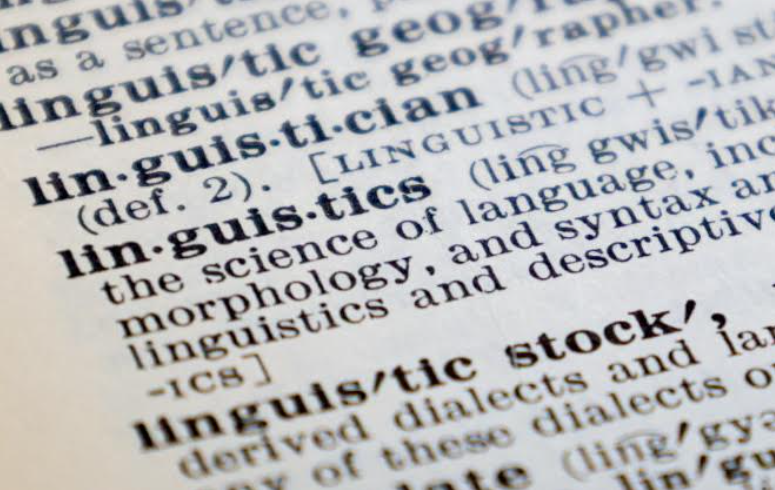
Starting in the 2026-27 school year, Middleton High School (MHS) will offer a new semester-long linguistics course designed by German teachers Matthew Greene and Lindsey Vogel. While linguistics includes several fields, such as phonetics, syntax, semantics, and pragmatics, the course is designed to introduce students to the basics of how language works in an accessible way. Although linguistics can sound complicated, the class focuses on building foundational language skills and is open to all students.
The course will be taught by Greene, who joined MHS this year as a German 5 and 6 teacher but brings extensive experience in language education. He previously taught a wide variety of languages at UW-Madison, including Italian, Czech and Latin, and has informally studied around 70 languages. Despite his strong graduate school background in linguistics, teaching the subject at the high school level was not something he initially planned.
“To my knowledge, it hasn’t been done,” Greene said.
The idea for the course was conceived out of student interest. In Greene’s German 5 class, discussions often expanded beyond grammar and vocabulary.
“It seemed like [German 5] [was] very interested in the cultural dynamics of German and how languages change over time,” Greene said. That curiosity led him to consider how linguistics could appeal to a wider audience. “I started thinking about what opportunities there could be, not just for German students,” he added. After discussing the idea with Vogel and MHS associate principal Barry Holloway, it became clear there was strong student interest in the course.
While MHS already offers several world language courses in Mandarin, Spanish, German and French, Greene sees linguistics as a way to better reflect the school’s linguistic diversity. In his advisory alone, there are native speakers of Arabic, Punjabi, and Portuguese.
“I’m excited to have representation of other [languages],” Greene said, noting that while Spanish and French are core languages and commonly taught, it is important to branch out. Learning less commonly taught languages helps students understand cultures, histories and communities that aren’t often included in traditional language classes, he says. Greene said the linguistics course is intended to move beyond a focus on European and Indo-European languages by “giving [less commonly taught] languages the opportunity to have center stage in the classroom.” Greene hopes to explore African languages and Asian languages beyond Mandarin, which are rarely discussed at the high school level.
While the course structure is still being developed, Greene has a few visions about what he hopes students will gain from the class. Students will build a foundation for talking about language and use it as a tool to understand the world around them. The class will also build on the skills that students learn in English and social studies classes, emphasizing analysis and critical thinking. Greene encourages students to actively question information rather than passively absorb it.
“I really like creating an environment where students are not just taking in information, but they’re questioning it, and they’re thinking about it, and they’re applying it in different ways,” he said. Through studying language, students will explore how it connects to history and culture by asking questions such as, “Why is German spoken in Namibia? Why is there a resurgence of Hawaiian?” Greene said. As Greene explains, linguistics allows students to use “languages as a lens to understand the world around us and to really think about our own communities.”
Greene emphasizes that Linguistics is open to students of all grades and backgrounds; no prior knowledge is needed. One of his main goals is to make the study of languages more accessible and less intimidating.
“There’s a fear in the United States around languages–‘it’s too hard for me’ or ‘I don’t need a language because I already speak English,’” he said. Through this course, he hopes to challenge that mindset. “There’s so much that we can learn about languages and about the world,” he said.