
As the winter months begin and students at Middleton High School start dreaming of the long breaks, sickness spikes. One of the main culprits for this sudden rise in illness rates is influenza, or “the flu.”
According to the World Health Organization, the flu is a respiratory viral infection that typically involves a dry throat, fever, dry cough, headaches and a runny nose. However, out of the four types of the virus—A, B, C, and D—both A and B have been found to increase periodically during “flu season,” or the yearly increase in flu infections. Influenza is not the only disease to spike during the cold seasons, as many other respiratory diseases—such as one of the causes of the common cold, rhinovirus, as well as bronchitis and multiple types of coronaviruses—also show a rise in cases during this time.
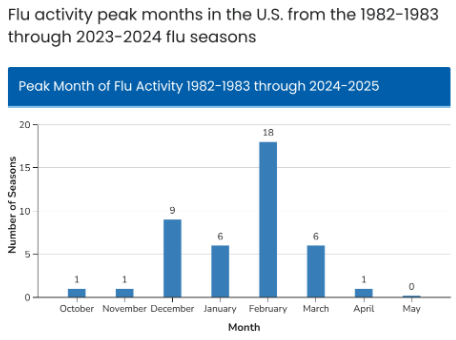
Flu season starts as the weather begins to cool down and ends once it begins to warm up. The Centers for Disease Control (CDC) has found that since 1982, the typical month of peak flu activity is February, with months outside the December-March range barely having any peak activity at all. This data also happens to somewhat align with the Midwest’s on-average coldest month, though that varies greatly between locations.
The cause for this drastic spike is not the cold itself, but rather how the cold worsens our bodies’ abilities to fight the infections off.
Atlantic Health has noted that the increased time indoors caused by cold weather leads to less room for air to circulate and more chances for germs to be left on surfaces that one is likely to touch. In addition, staying inside more often cramps people together inside rooms, giving more opportunities to spread infections between each other.
Our biology also suffers greatly from the cold. The small hairs inside your nose, cilia, that usually help push unwanted items out, fail to work in the freezing cold. The dry atmosphere also slows and lowers mucus flow, which can hinder flushing out bacteria. Additionally, Harvard Medical Journal highlighted a study involving a unique particle called an extracellular vesicle (EV), which the nose uses to trap and drive out viruses. When exposed to cold temperatures, EV production also drops. These factors all combine to significantly decrease the nose’s protection against viruses during the colder months, giving them an easy way to enter the body.
Staying inside because of the cold also decreases exercise, which plays a significant role in the immune system’s ability to function. The immune system is further weakened by a lack of vitamin D due to cloudier days and people wearing more layers of clothing. This can both increase autoimmune resp

onse and worsen defense against infection.
While many people recover on their own from the most common flu season diseases, infants under two, adults over 65 and others with compromised immune systems can still be put at serious risk when catching a virus. The CDC has published an expanded list of who they consider at-risk. The health and safety of some, combined with getting sick being generally unpleasant, means that everyone benefits from trying to prevent wintertime sickness.
To prevent the flu around this time of year, washing hands, covering coughs, keeping up-to-date on flu vaccines, avoiding sick people when possible to stay healthy and hygienic are all great ways to be proactive about your health.
Staying hydrated may prove to be especially helpful, considering the immune problems that the dry atmosphere causes. Running humidifiers could also help alleviate some of the moisture lost from indoor heating. Consuming more foods with vitamin D in them, such as fish, milk, eggs or almonds, could help your immune system with an added boost.
Trying to squeeze in time for relaxation and stress relief is also recommended during these busy months. As the National Library of Medicine states, long-term stress can end up producing too much of a hormone called cortisol, which suppresses immune function. Chronic stress can decrease white blood cell levels, which further weakens defenses.
However, it’s not recommended to take antibiotics as a way to prevent or treat diseases from flu season. Antibiotics work on bacterial infections, not viral infections that comprise many of the threats of flu season. This only serves to waste money, risk side effects and give actual bacterial diseases a chance to develop stronger immunity to medications.
Flu season serves as a large annoyance in wintertime, so understanding just why exactly it happens can help keep you prepared to face the winter, hopefully without getting sick.