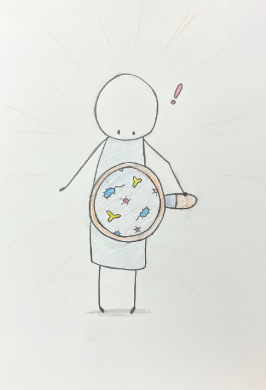
How am I not myself?
This existential question, posed perhaps most famously by the 2004 film “I Heart Huckabees”, actually has a physiological side to it: the microbiome!
The microbiome is the collection of all microbes that naturally live in and on one’s body, including viruses, fungi, bacteria, parasites and their genes. By cell count, it makes up a huge percentage of the body, with current estimates saying that bacteria alone comprise 38 trillion cells of the average adult human body, compared to only 30 trillion human cells.
While some microbes can be harmful, most have a symbiotic relationship with people, meaning their relationship is mutually beneficial. They help the human body in areas ranging from immune defense to digestion.
Digestion
Most microbes whose relationship with humans is symbiotic are bacteria that live in the gut, comprising a community of 380,000 billion bacteria. These bacteria aid in digestion and even retrieve calories from things one cannot digest on their own.
Interestingly, not all bacteria in the gut feed on the same things. Thus, when one eats a specific food, only certain gut bacteria will be able to thrive. In order to maintain a gut environment of foods they can consume, these bacteria send signals to the brain that trigger cravings for those foods.
In addition to the food one consumes, bile in the intestines is also something that gut bacteria play a part in metabolizing. In a process called enterohepatic circulation, bacteria and their enzymes help break down the bile, and the resulting acids can then be reabsorbed and reused by the liver.
There are also more indirect ways the microbiome helps with digestion, such as by aiding the approximate 80% of the body’s immune cells which are found in the gut to protect it and the body as a whole.
Immune Health
The gut is the largest organ of the immune system, so the abundance of microbes here can be quite helpful to immune health.
In order to survive amongst the immune cells of the body, many beneficial microbes have evolved to train the immune system. That is, through means like producing messenger substances, these microbes teach the immune system to differentiate them from harmful pathogens.
In addition to training the immune system, the microbiome can also stimulate immune system activities. For instance, some beneficial microbes of the gut can break fibers down into short-chain fatty acids that stimulate immune cells. An application of this activating effect is when gut immune cells are vitalized. They can send an alarm to the brain that activates immune cells there, thus allowing the brain to heal from injuries. A different application is the faster regeneration of gut immune cells.
Outside of impacting the function of the human body’s immune system, microbes themselves can act as a defense against pathogens. By competing with harmful microbes for nutrients and space to attach to the gut’s mucus membrane, microbes like bacteria Peptostreptococcus and Bifidobacterium prevent pathogens from growing excessively.
Nervous System
To communicate with the brain—which controls what one eats and thus the environment of the gut—microbes produce chemical neurotransmitters. Neurotransmitters that bacteria specifically consume or produce include norepinephrine, dopamine, gamma-aminobutyric acid (GABA) and serotonin. In fact, 90% of the body’s serotonin is produced in the gut.
Though they all have the general function of passing chemical messages through the body, the neurotransmitters linked to the microbiome are unique in their specific functions. GABA is an inhibitory neurotransmitter that prevents problems in areas like sleep, anxiety and concentration. Norepinephrine, in contrast, increases heart rate and blood pressure. Dopamine is a key element of the body’s reward system; serotonin helps to regulate mood, pain, appetite and more.
Because of its involvement in chemical messaging, overall mental health can be tied to one’s microbiome. In fact, when healthy rats in a study were fed microbes from people with depression, the rats began to exhibit symptoms relating to anxiety and depression. This may help explain the large overlap between people who have mental health disorders and those who have functional gastrointestinal disorders—disorders with no clear physical cause but persistent symptoms relating to the stomach and intestines of the gut.
Plus More
The microbiome has several different functions aside from those mentioned above, including producing vitamin B12—a vitamin necessary for functions including synthesizing DNA, healthy red blood cells and myelin sheaths—to vitamin K, which helps with blood clotting and bone formation.
The entire body is covered with microbes, beginning as soon as one passes through the mother’s birth canal. With over a thousand species of microbes in the human microbiome, the microbiome’s roles are great in number and diversity.